
Servicing the Roskopf Pocket Watch Pin-pallet Escapement
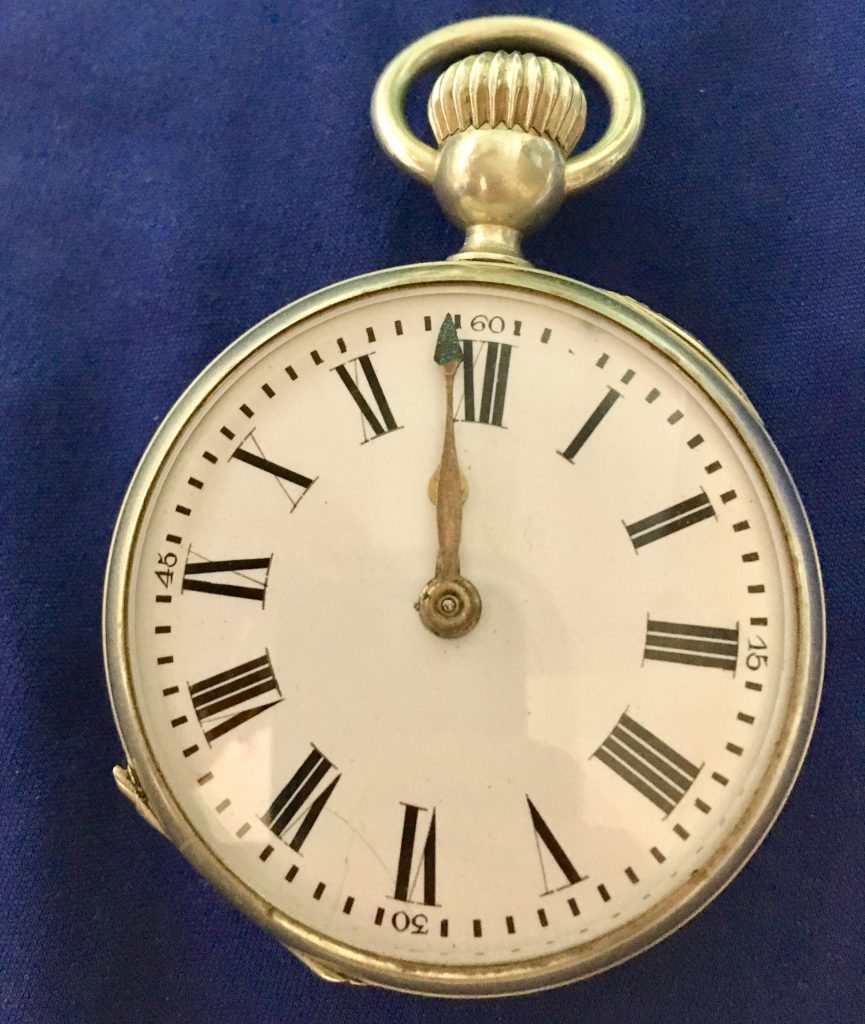
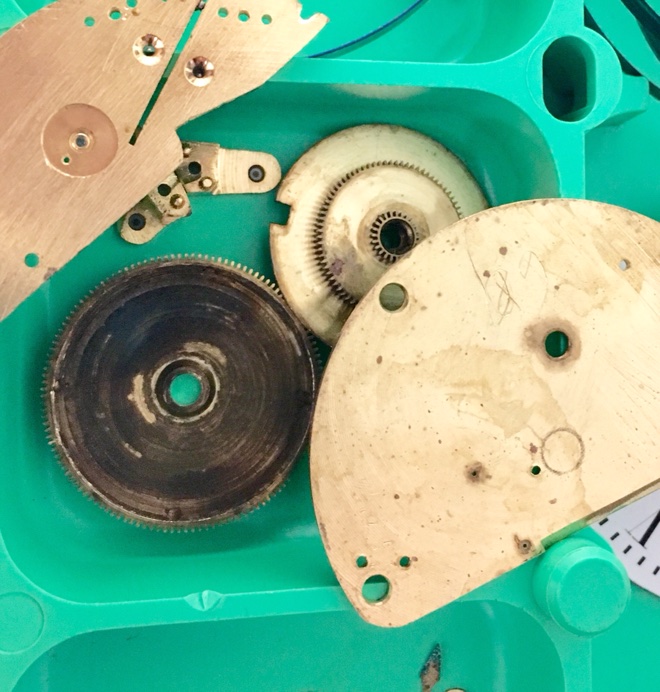
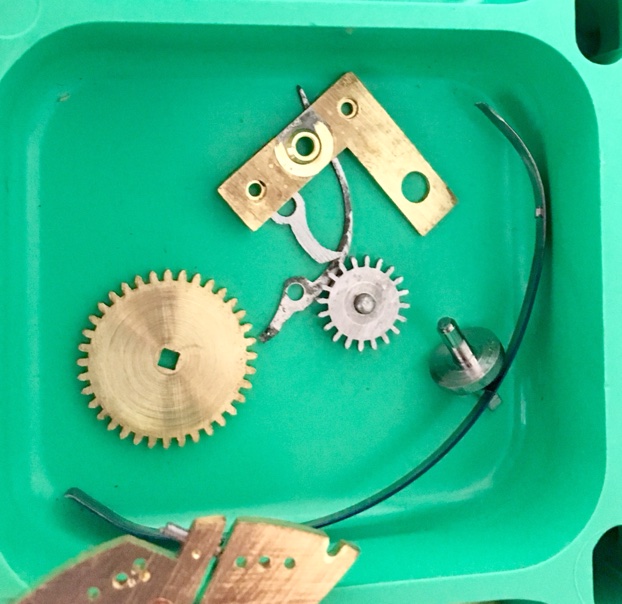
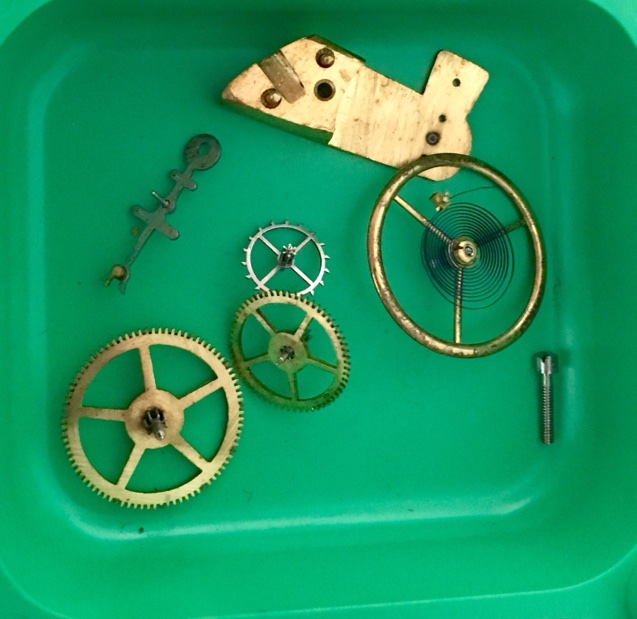
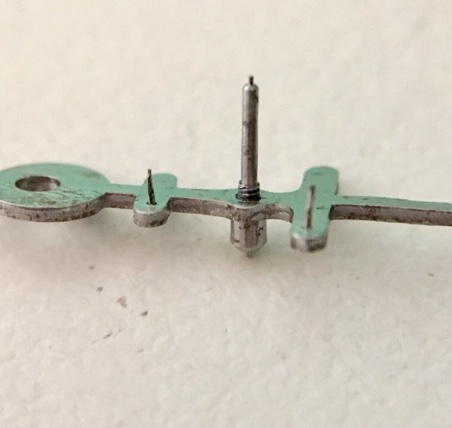
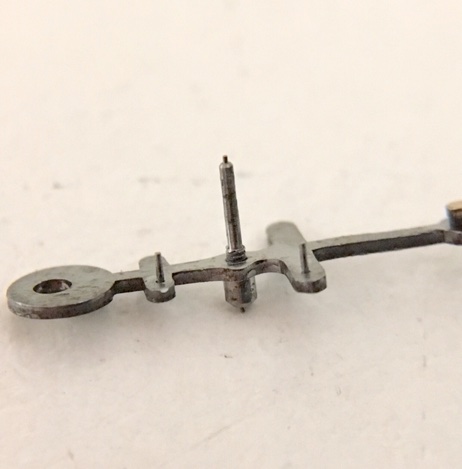
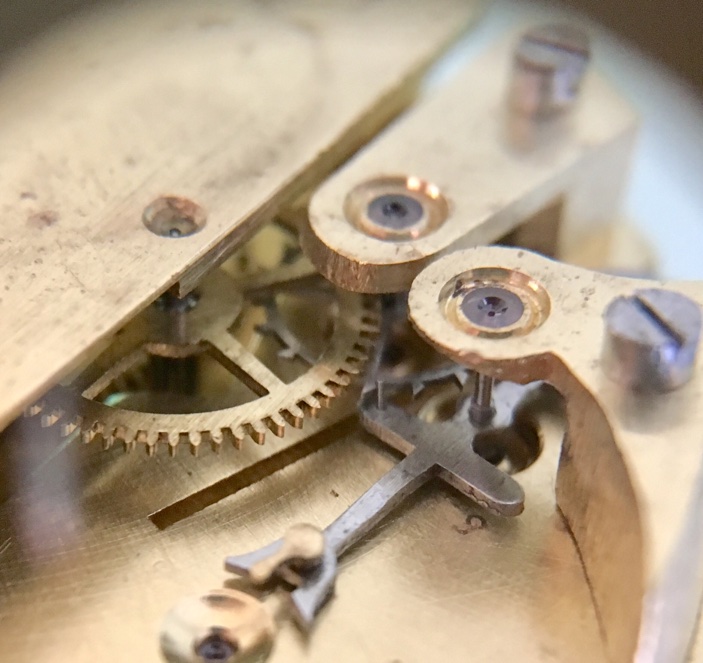
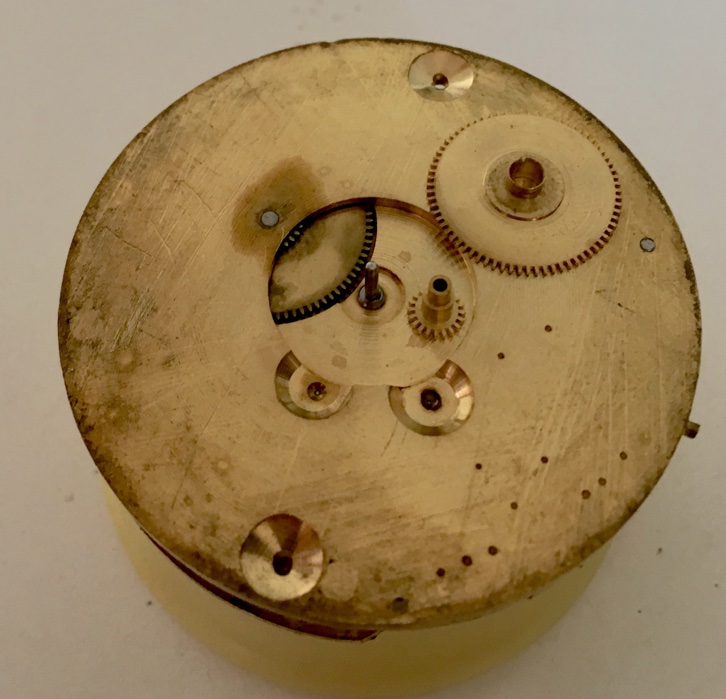
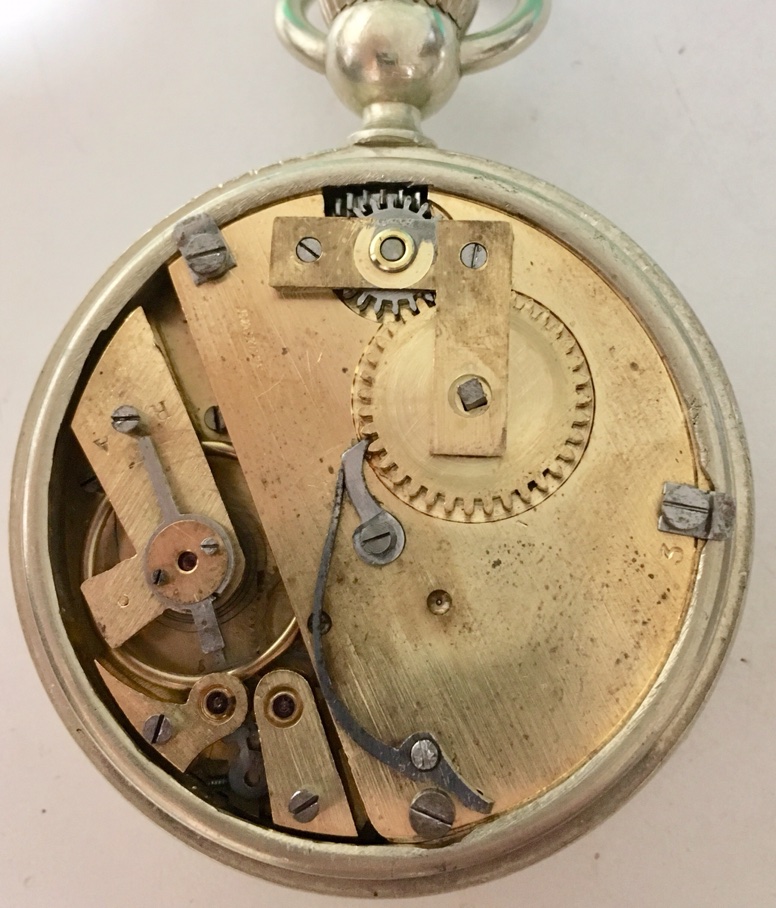
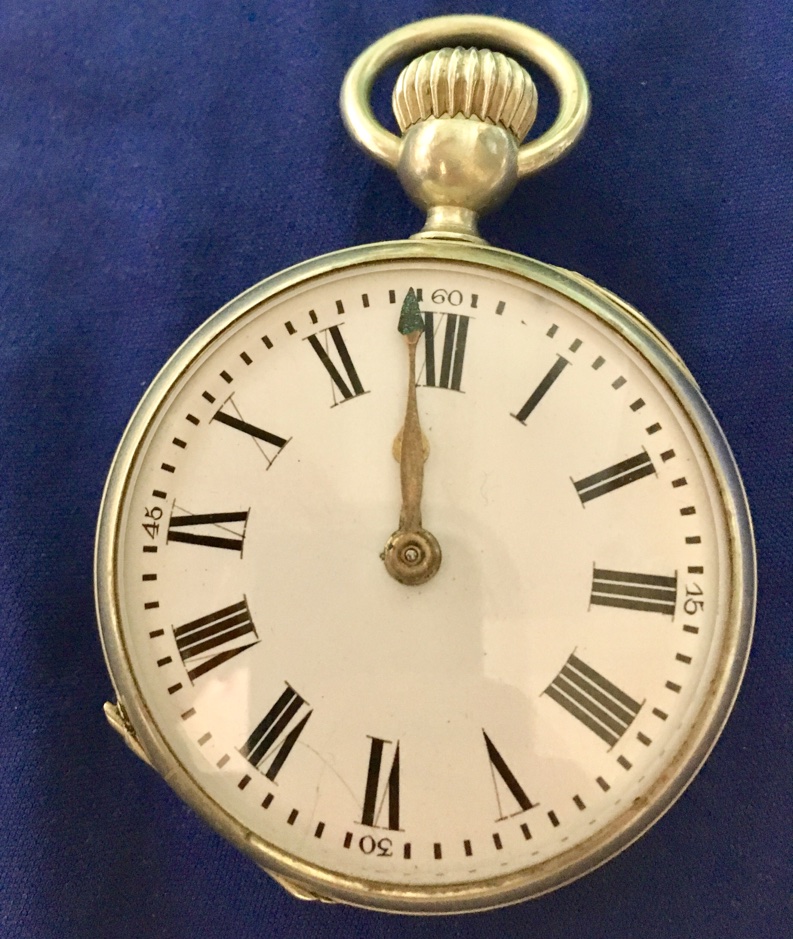
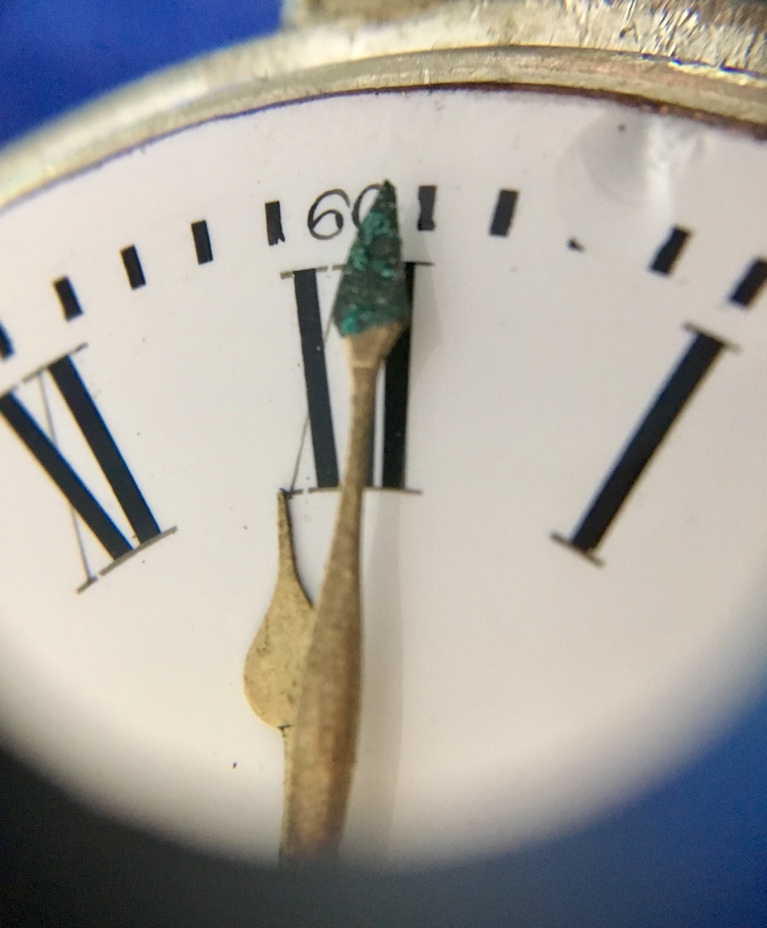
The thick heavy brass plates and wheels are cleaned and inspected. New pins replaced old worn pins on the pallet. The watch was stem wound, but finger set. This watch was set by moving the hands with one's finger depositing oils, leaving the heavy green corrosion at the tip of the minute hand (see picture below). After pivot and bushing polish, the watch comes to life and runs strong.
Roskopf History
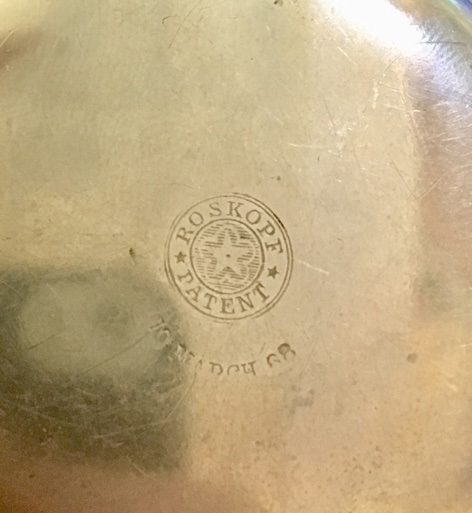
Georges Frederic Roskopf was a watchmaker during the mid-1800s. He developed the pin-pallet escapement (an easily and cheaply manufactured escapement used in inexpensive watches). His objective was to produce an affordable decent quality pocket watch, and that he did. This example is a plain, utilitarian, practical, and serviceable watch. Built well enough to be restored to good working condition some 150 years after it was made.
It had 8 jewels: upper and lower balance hole/cap, lever and escape wheel. The mainspring was protected from breakage by employing a hook that slipped inside the barrel if wound up too much.
Interesting to note is that the immensely cheap and popular Timex mechanical wristwatch (made from the early 1950s-1970s) that also used a pin-pallet escapement we’re so poorly made that it is almost impossible to service or repair them.
How to Initiate the Repair of your Antique Pocket Watch
If you would like to initiate the repair of your vintage timepiece contact me directly, or visit getting started.
For additional information on watches we work on please visit these pages: Vintage Rolex repair— Vintage Breitling repair —Vintage Omega repair — Vintage Heuer repair —Bulova Repair, and Pocket Watch Repair. See my FAQ for additional information, and visit Watch Repair Case Studies.
Have a watch that needs this kind of care?
I work directly with each client, with clear photos and communication throughout the service.
Get in touch